
Your student’s PSAT results are in. You have a score, a report, and probably a few questions about what happens next.
Before you decide how much preparation your student needs, use the results to understand where they are starting. A score can help you make a plan. It cannot tell you everything about the student who earned it or exactly how that student will perform on a future SAT.
In Method Learning’s Understanding PSAT Results webinar, Evan Wessler emphasizes that the PSAT establishes a baseline. It identifies strengths and areas to work on without setting a ceiling on future performance.
Use this guide for a conversation with your student. Leave with one realistic study priority and a date to check progress.
Look beyond the total score
Start with the Reading and Writing and Math section scores. Then review the Knowledge and Skills portion of the report. College Board uses this section to show performance across eight content areas, helping students identify where to focus their practice. See College Board’s guide to understanding scores.
The goal is to move from a broad concern to a specific task. “I need to get better at math” is difficult to act on. “I need more practice solving equations” gives the student a place to begin.
Treat the report as a starting point for that investigation. Use practice work to see which specific skills need attention rather than assuming a broad performance indicator explains every mistake.
Ask how the test felt
Before planning a study schedule, give your student a chance to explain their experience.
What felt familiar?
What felt challenging?
What should we work on next?
Their answers can add context to the score. A student who struggled with unfamiliar material may need a different approach from a student who understood the material but felt rushed. Check those impressions against practice work rather than relying only on memory of test day.
You do not need to solve everything in one conversation. Aim to identify a useful first priority.
Choose a target SAT date and work backward
Evan recommends beginning with a target test date and looking back two to three months to plan preparation. That is a planning guideline, not a promise that every student will reach a particular score in that period.
Consider the student’s starting point, goal, school workload, activities, and available study time. A plan that ignores the rest of the calendar is unlikely to be followed consistently.
Check the current test dates and registration deadlines before choosing a date. Then put actual study time on the calendar. “Study more this semester” is an intention. A recurring study appointment is something your student can follow.
Give each study session a purpose
A manageable routine might include focused skill practice, review of missed questions, and occasional timed work to see how those skills hold up under testing conditions.
When reviewing a missed practice question, ask the student to explain the correct approach. Repeating questions without understanding the mistakes makes it difficult to decide what to change.
Choose a small number of priorities, work on them, and revisit the plan as you learn more. Use progress to guide the next round of practice rather than trying to cover every topic equally from the start.
Match the support to the student
Evan also asks families to consider what process and support will work best for them.
A student who studies independently may be comfortable following a self-paced plan. A student who benefits from a regular meeting time may prefer a class. A student who needs individual explanation, focused feedback, or help staying accountable may benefit from tutoring.
The important question is whether your student can use the support consistently and turn it into productive practice.
Write down the plan together
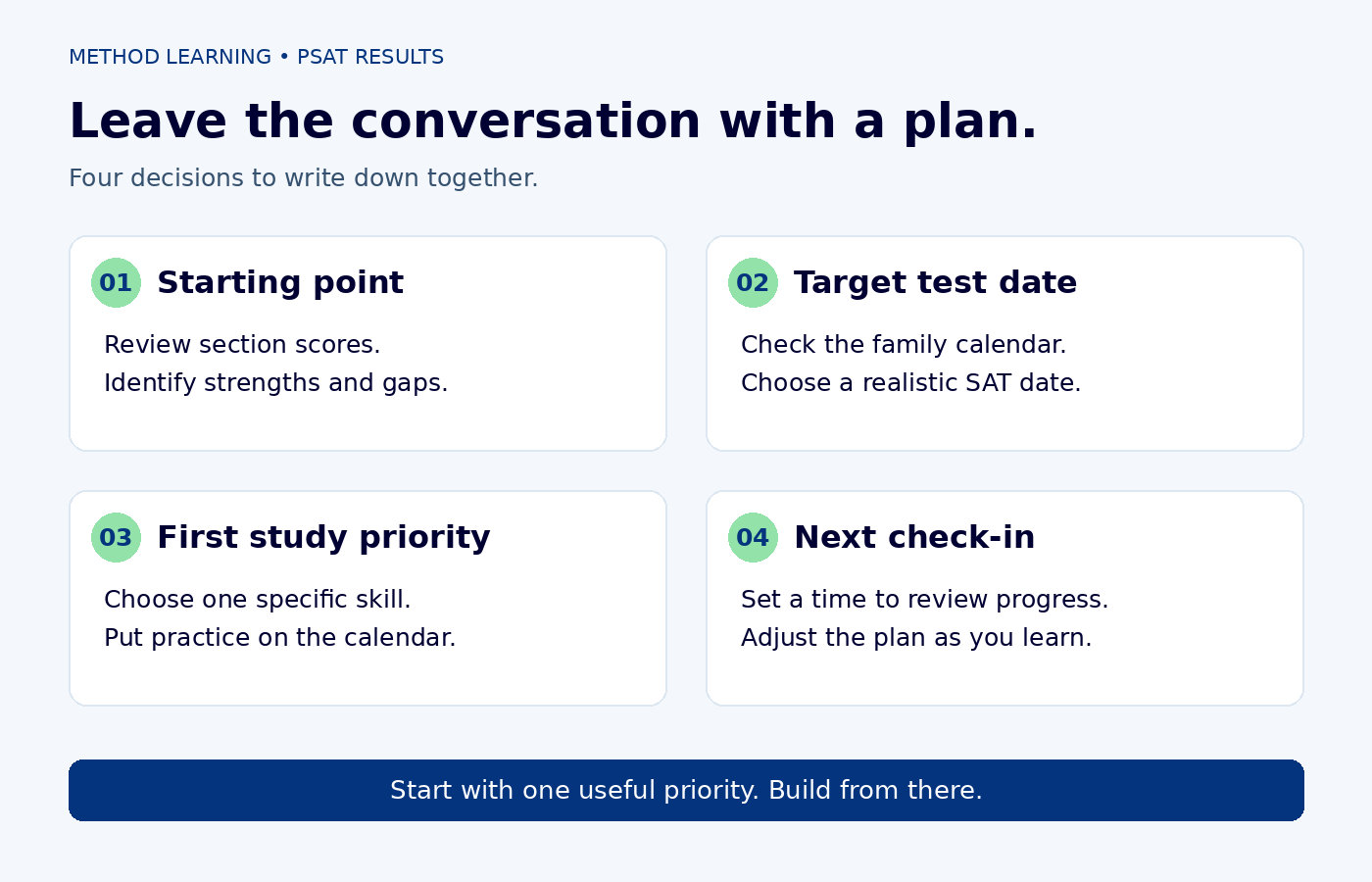
Before you finish the planning conversation, write down four things: the current starting point, the target test date, the first study priority, and the next check-in. That gives the family a concrete place to begin.
For more on how a tutor can use a 10th grader’s score report, read 10th Grade PSAT: Turn Your Score Into a Personalized SAT Strategy.
Watch the full Understanding PSAT Results webinar for Evan’s explanation of the score report and next steps.
Need help choosing the next step? Schedule a free consultation with Method Learning to discuss your student’s goals and preparation options.